
Space Seed Holdings Visits the International Office of Universitas Gadjah Mada to Exchange Views on Waste Recycling
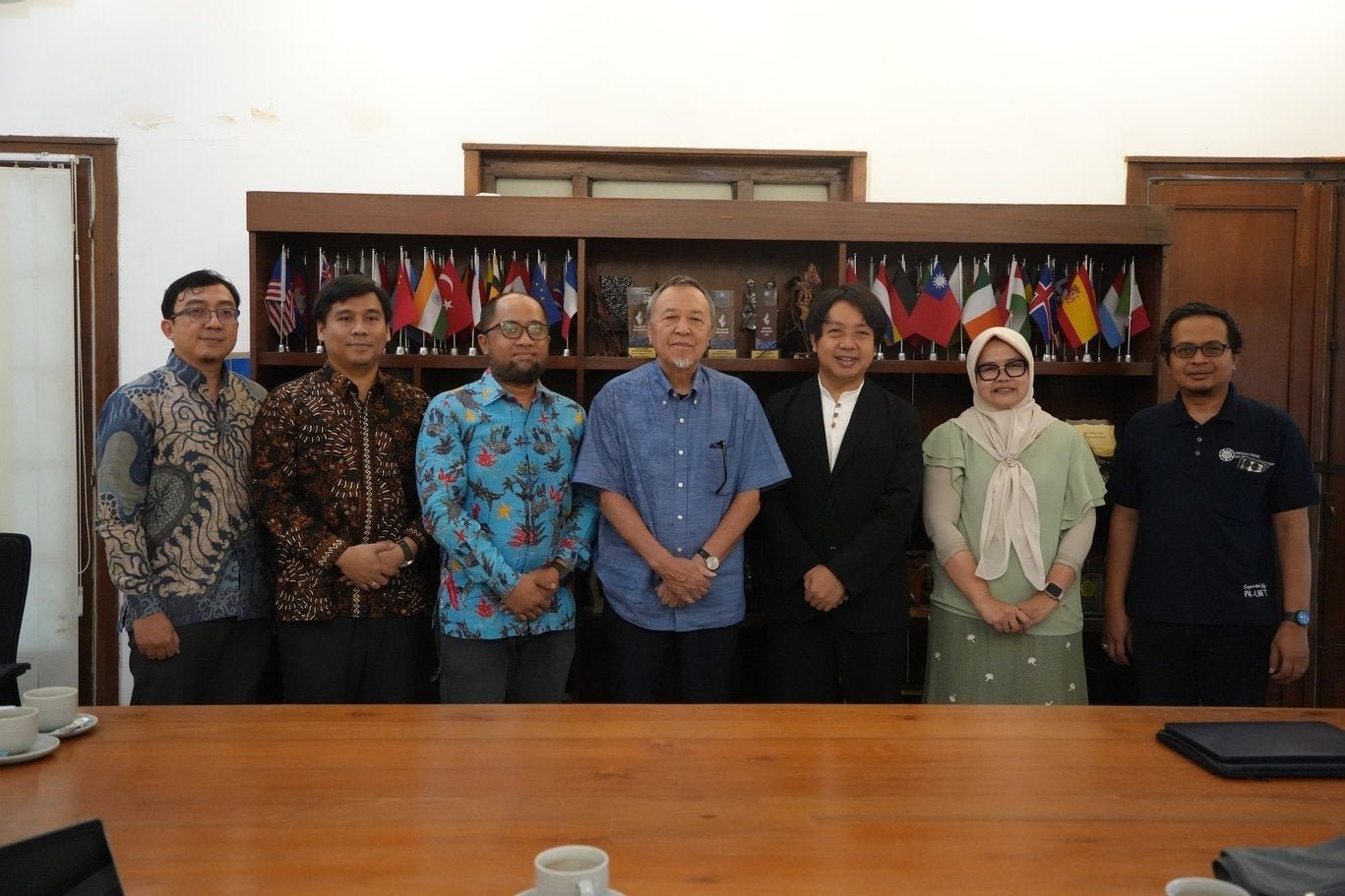
On August 15, 2026, Space Seed Holdings Inc. (Headquarters: Minato-ku, Tokyo; Representative Director and CEO: Kengo Suzuki; “SSHD”) visited the Office of International Affairs (Bulaksumur F.13) of Universitas Gadjah Mada (“UGM”) in the Special Region of Yogyakarta, Indonesia, and exchanged views on waste recycling with Tyas Ikhsan Hikmawan, Ph.D., of the UGM Faculty of Biology, who heads international cooperation at UGM’s Directorate of Partnership and Global Relations, and others. Hirohide Nakamura, Chairman of AAI Co., Ltd. (Asia Africa Research, Consulting & Investment; Headquarters: Kurume, Fukuoka), joined the visit.
The parties shared the view that recycling using biotechnology requires separation at the source, and that once separation is in place, black soldier fly rearing and composting could improve the environment and build a circular society while also being economically sound compared with conventional waste disposal.
Background: Yogyakarta’s waste challenge and UGM’s response
In the Special Region of Yogyakarta, the phased closure of the regional Piyungan landfill (TPA Piyungan) has left insufficient capacity for collection and disposal, making municipal waste a key regional issue. Landfill shortages and greenhouse gases from decomposing organic waste are an environmental burden and also raise local governments’ fiscal costs.
For medical waste, an even more serious capacity shortfall has been reported. According to Ministry of Health figures for 2019, about 290 tonnes of medical waste are generated per day by 2,820 hospitals and 9,884 health centers nationwide, while combined treatment capacity—10 licensed treatment companies (about 170 tonnes/day) and 87 hospitals with incinerators (about 60 tonnes/day)—is only about 220 tonnes, leaving about 70 tonnes untreated each day. In the Special Region of Yogyakarta, only one of the 78 hospitals obliged to manage B3 (hazardous and toxic) waste is reported to hold a permit to operate an incinerator.
UGM has set up a university-wide waste task force, established waste research and treatment facilities on campus, and is demonstrating several technologies, including composting and bioconversion by insects. Its basic policy favors decentralized solutions based on technologies that can be developed and operated locally (inovasi teknologi lokal), rather than relying on large imported equipment.
Discussion
With Dr. Hikmawan, whose specialty is environmental science and environmental monitoring using molecular-biological methods, and others, the parties shared the following views.
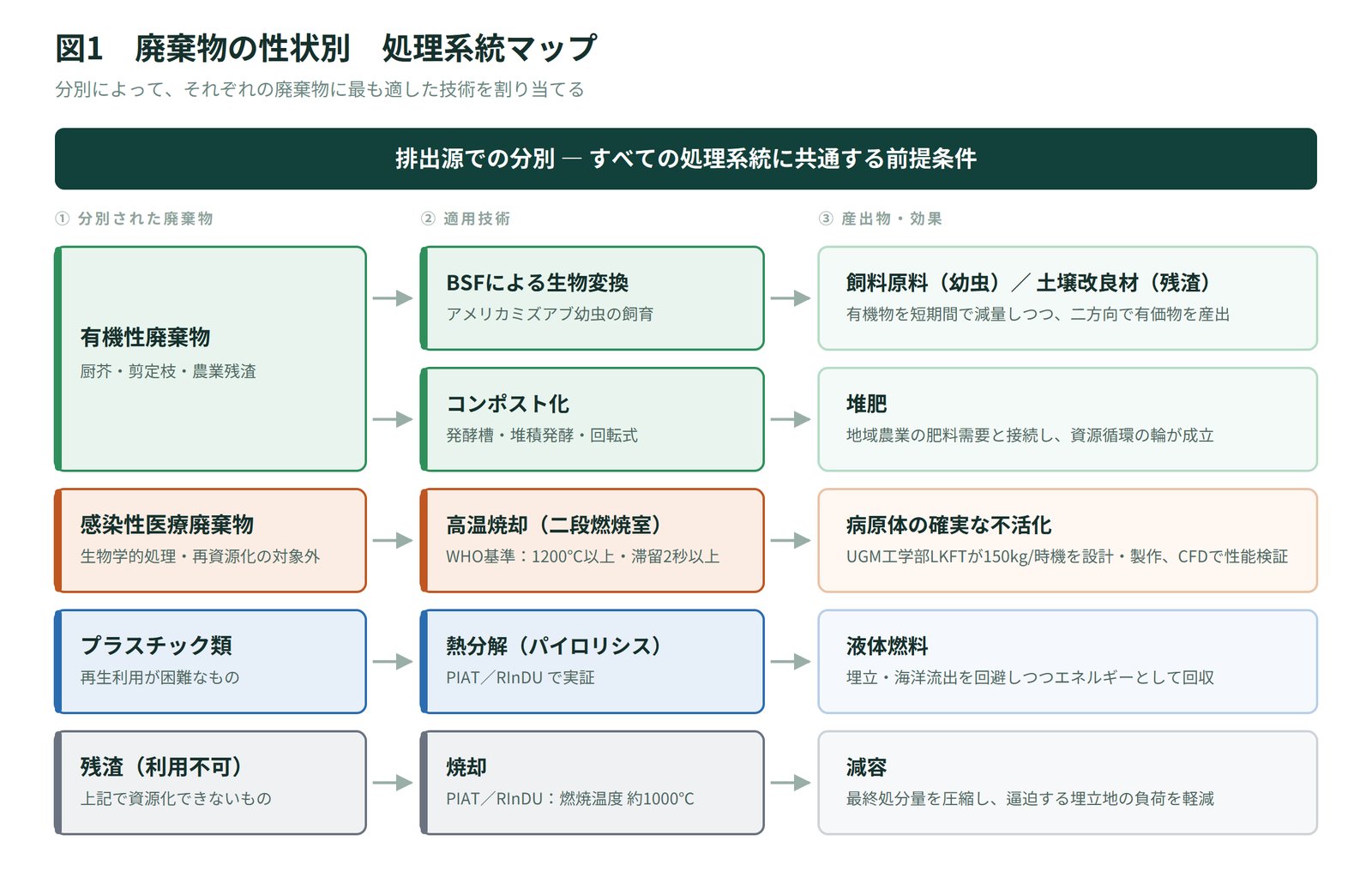
Separation is a precondition for using biotechnology. The quality of biological treatment depends on the nature of the organic matter fed into it. If plastics, metals or hazardous substances are mixed in, neither processing efficiency nor product quality can be ensured, so thorough separation at the source is an essential requirement for introducing the technology. Conversely, once separation is designed in, a path to resource recovery opens without costly pre-treatment equipment. “Separation” here does not mean only removing foreign matter from organic waste; it means routing each type of waste to the appropriate treatment pathway according to its nature.
Infectious medical waste requires reliable inactivation of pathogens, so it is not a candidate for biological treatment or resource recovery; high-temperature incineration is the appropriate option. UGM is also working to establish local technology in this field that does not depend on imported equipment. LKFT UGM (Lembaga Kerjasama Fakultas Teknik), the cooperation institute of UGM’s Faculty of Engineering, designed and built a medical waste incinerator with a two-stage combustion chamber and a capacity of 150 kg/hour together with a local company, PT Adil Makmur Sentosa. The design was checked by computational fluid dynamics (CFD) against the WHO criterion for the secondary chamber of at least 1,200 °C and a residence time of at least two seconds; the initial design was found to have a mean residence time of only 0.198 seconds, and a design change adding baffles improved it to 3.74 seconds. In addition, the UGM Academic Hospital (Rumah Sakit Akademik UGM) is quantifying the environmental impact of medical waste treatment through life-cycle assessment (LCA).
Organic waste such as kitchen waste and pruned branches, on the other hand, consumes fuel just to evaporate its water when incinerated, and its carbon and nitrogen are lost. For this waste, bioconversion by black soldier flies or composting is the rational choice. UGM’s practice of separating treatment pathways by waste type, developing suitable technologies locally for each, and verifying them against international standards is an example of designing “which technology to apply to which waste” from the outlet backward.
Treatment technologies that become effective once separation is achieved. For separated organic waste, bioconversion by black soldier fly (BSF, Hermetia illucens) larvae and composting are effective options. BSF reduces organic matter quickly, while the larvae can be used as a feed ingredient and the residue as a soil amendment. Composting, too, closes the resource loop when linked to agricultural demand.
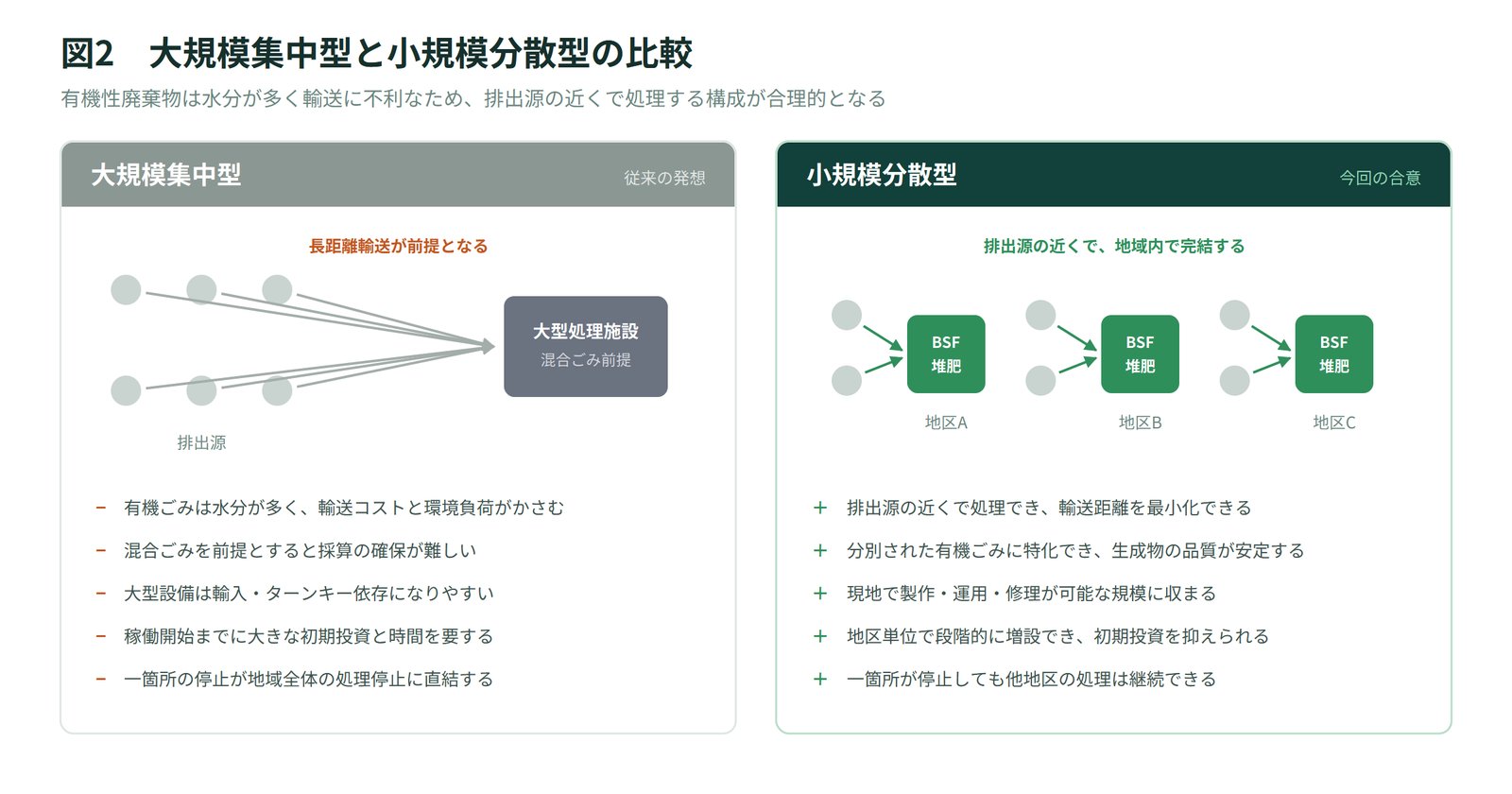
Small, decentralized systems fit better than large, centralized ones. Organic waste contains a lot of water, so transporting it over long distances raises costs and environmental impact, and large-scale processing that assumes mixed waste makes profitability hard to secure. The parties agreed that distributing small facilities near the sources of waste and closing the loop at the community level is rational both technically and economically. This direction also matches UGM’s basic policy of decentralized solutions based on local technology.
Soundness both environmentally and economically. These methods reduce the environmental burden of landfilling and incineration and bring economic benefits in two directions: lower collection, transport and final-disposal costs, and the production of valuable outputs such as feed and fertilizer. The parties again shared the view that the proposal can also stand up on cost compared with conventional waste disposal.
Participants
Universitas Gadjah Mada:
- Tyas Ikhsan Hikmawan, Ph.D. (Head of International Cooperation, Directorate of Partnership and Global Relations)
- Prof. Wiratni, S.T., M.T., Ph.D. (Director, Directorate of Business Development)
- Prof. Suherman, S.Si., M.Sc., Ph.D. (Deputy Director, Directorate of Partnership and Global Relations)
Visiting side:
- Kengo Suzuki (Representative Director and CEO, Space Seed Holdings Inc.)
- Hirohide Nakamura (Chairman, AAI Co., Ltd.)
- Ananda Setiyo Ivannanto (President Director, PT Awina Sinergi International)
Next steps
Building on the shared understanding reached in this meeting, SSHD will work with UGM and local stakeholders to design separate-collection systems and to develop concrete resource-recovery models using biotechnology.
About Universitas Gadjah Mada
Universitas Gadjah Mada is a comprehensive national university in Yogyakarta, Indonesia. Under the motto “Locally Rooted, Globally Respected,” it promotes research grounded in solving regional challenges and international collaboration.
https://www.ugm.ac.id
About AAI Co., Ltd.
AAI Co., Ltd. (Asia Africa Research, Consulting & Investment; Headquarters: 356-1 Tori-machi, Kurume, Fukuoka; Chairman: Hirohide Nakamura) conducts research, consulting and investment businesses in Asia and Africa, including Indonesia. Space Seed Holdings took an equity stake in the AAI group in January 2025.
https://www.aai-jp.com/
About PT Awina Sinergi International
PT Awina Sinergi International (PT AWINA) is the Indonesian company of the AAI group. Based in Indonesia, it develops businesses in renewable energy, environmental solutions and related fields, and through partnerships with Japanese companies creates businesses in renewable energy, waste management and the circular economy, promoting business links between Japan and Indonesia.
https://awina.co.id/
About Space Seed Holdings Inc.
Space Seed Holdings Inc. is a space-focused deep-tech venture builder whose mission is “Turning science fiction into nonfiction.” Through research, development and social implementation of new technologies, and investment in and nurturing of research seeds, the company creates businesses that address societal challenges.
https://ss-hd.co.jp/